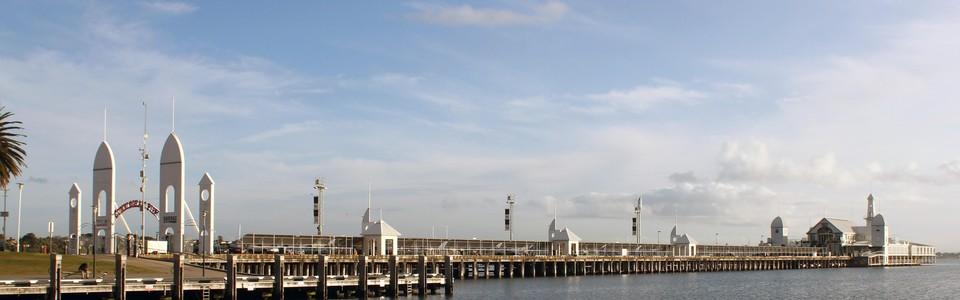
14th Interpretive Policy Analysis Conference to be held at Deakin University in Geelong, Australia
We warmly invite you to join us in Australia and take part in the long-awaited return of the Regional IPA conferences.
-
Call for papers
22nd May 2026 - 15th July 2026
Ongoing
-
Papers Evaluation
15th July 2026 - 31st July 2026
Upcoming
-
Conference
26th November 2026 - 27th November 2026
Upcoming
We are pleased to announce the call for papers for the 14th Interpretive Policy Analysis Conference, Australia–New Zealand–Asia-Pacific Edition. This year’s conference is jointly organised by the Critical and Interpretive Policy Network and the Critical Policy Studies Network of the International Public Policy Association in collaboration with the Australian Political Studies Association’s Interpretive Methods Research Group and will take place in an innovative new format.
For the first time, the conference will unfold across three interconnected regional editions in South America, Oceania, and Europe. This approach is designed to expand participation, deepen regional engagement, and strengthen our global scholarly community, while supporting a more environmentally responsible model.
The Australia–New Zealand–Asia-Pacific edition will take place in Geelong on 26-27 November 2026, following the Australian Political Studies Association Conference. This scheduling is designed to support participation across both conferences and to foster intellectual exchange between overlapping scholarly communities. Like the other two regional editions, it is fully international in scope, and we warmly welcome participants from around the world.
The conference is open to scholars from across the Asia-Pacific and beyond for a focused intellectual gathering. We especially encourage participation from PhD students and early career researchers and aim to create a supportive environment for developing and refining work in progress.
Over the past two decades, the Interpretive Policy Analysis (IPA) conferences have grown into a vibrant and distinctive intellectual community. They have played a central role in shaping international conversations on power, meaning-making, narratives, values, democratic practices, emotions, and qualitative methodologies in public policy research. What makes IPA unique is its sustained commitment to critical-interpretive scholarship. The conference is intentionally designed as an intimate event, creating space for careful dialogue, reflexive engagement, and genuine community-building.


INTERNATIONAL PUBLIC POLICY ASSOCIATION
LAET-ENTPE, 3 Rue Maurice Audin
69120 Vaulx en Velin, France
Tel. +33 (0) 72 04 72 53
contact@ippa-pp.org


