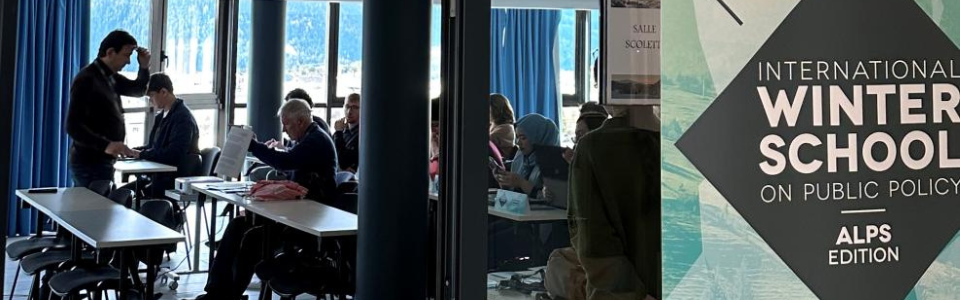
Course by Patrick Hassenteufel
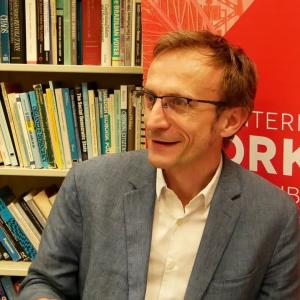
Patrick Hassenteufel (University of Paris-Saclay)
Course: Analyzing Policy Coordination in Times of Crises
In the 21 st century policy coordination has become a major issue because of the rise of wicked problems crossing the boundaries of established policy sectors and levels, in a context of multiple and simultaneous crises (poly-crises): environmental, social, demographic, financial, energetical, geopolitical... This has led to the development of inter-institutional, inter-organizational, inter-professional and multi-level policies, shaping new boundary-crossing agencies and boundary-spanning roles. The first objective of this course is to give a general picture of these evolutions with a focus on the shaping of coordinating institutions, instruments and roles. A second aim is to present and to discuss the main analytical tools that have been elaborated to understand and to explain the development of coordination policies (especially collaborative governance, collaborative public management and multilevel governance). The third purpose is to propose a sociological perspectives to grasp empirically policy coordination processes in the context of crises, especially pragmatist approaches focused on policy transactions and governing crises. A last goal is to shed the light on the different limits and problems for policy coordination, especially in a time of political polarization and increasing fragmentation of policy actors.

INTERNATIONAL PUBLIC POLICY ASSOCIATION
LAET-ENTPE, 3 Rue Maurice Audin
69120 Vaulx en Velin, France
Tel. +33 (0) 72 04 72 53
contact@ippa-pp.org


