About the IPA conferences
The Interpretive Policy Analysis (IPA) Conferences began in 2006 in Birmingham, followed by the 2007 edition in Amsterdam, marking the emergence of an international community committed to interpretive, qualitative, and critical approaches to public policy. In the following years, the conference traveled throughout Europe and also reached North America and Australia, gaining breadth, depth, and visibility as a space dedicated to understanding policy as a field shaped by narratives, meanings, values, practices, and lived experiences. In 2026, the IPA Conferences celebrate 20 years in a new and exciting format. Its 14th edition will take place across South America, Europe, and Oceania—inviting participants to engage in a truly global and connected experience. Join us in this unique and inspiring journey!
Brief history of IPA Internacional conferences
The Interpretive Policy Analysis (IPA) Conferences emerged from the desire to foster greater dialogue in response to the growing number of scholars contributing to and expanding critical studies in public policy, particularly from an interpretive perspective, which has often served as a gateway to critical engagement. The idea was that by creating dedicated spaces, we could strengthen and deepen this collective endeavor.
The first conference took place in Birmingham in 2006, exactly twenty years ago. Participation exceeded expectations, encouraging us to continue organizing new editions. We quickly created a space rich in dialogue, with time for in depth discussions, room for consensus building, respect for disagreement, and, above all, a strong sense of openness and support for emerging scholars.
Explore our journey
The trajectory of the Interpretive Policy Analysis (IPA) Conferences reveals not only a geographical expansion, but also a deepening and diversification of its intellectual agenda over time. Since its first edition in Birmingham in 2006, the IPA community has continuously evolved as a vibrant space for critical, interpretive, and reflexive engagement with public policy.
In its early years, the conferences were primarily concerned with establishing the foundations of interpretive policy analysis. The first editions in Birmingham (2006) and Amsterdam (2007) focused on interpretive practices, reflexivity, and the development of a shared research agenda across disciplines. This foundational phase was marked by a strong emphasis on methodological plurality and on positioning interpretive approaches as legitimate and necessary within the broader field of policy studies.
As the conference series progressed, themes began to engage more explicitly with questions of power, discourse, and governance. Meetings in Essex (2008), Kassel (2009), and Grenoble (2010) explored the relationships between democracy, legitimacy, and policy practices, while also advancing methodological innovation. During this period, IPA consolidated itself as a space attentive to the complex interplay between language, power, and institutional processes.
From the early 2010s onwards, the conferences expanded their analytical scope to include the performative, emotional, and non-cognitive dimensions of policy. Events in Cardiff and Tilburg (both in 2011) highlighted issues such as deliberation, public participation, authority, and credibility, while also bringing attention to the role of emotions and embodied practices in policy processes. This marked a significant shift toward a more nuanced and situated understanding of policy work.
Subsequent editions continued to broaden the thematic landscape. Conferences in Vienna (2013), Wageningen (2014), and Lille (2015) engaged with global conflicts, knowledge and technology, and the construction of publics, emphasizing the tensions between expertise and participation, as well as the contested nature of legitimacy and identity in policy processes. These discussions reflected an increasing concern with the dynamics of globalization and the changing nature of governance.
In the mid-2010s, the IPA community also began to address pressing societal challenges more directly. The conferences in Hull (2016) and Leicester (2017) focused on topics such as climate change, social practices, activism, populism, and democratic disruption. These editions demonstrated a growing commitment to connecting interpretive analysis with urgent political and environmental issues, while also exploring alternative political imaginaries.
In 2017, during the conference in Leicester, UK, the group decided to experiment with joining the conferences of the International Public Policy Association (IPPA), creating dedicated spaces within them for themes and research in critical interpretive policy studies. We understood that the biannual IPPA conferences (ICCP) represented a major platform for broader dialogue, including engagement with other schools of thought.
This led us to join the ICPP in 2019 in Montreal, Canada, where we became part of the wider conference while organizing a significant number of panels and roundtables. At the next edition, ICPP5 in Barcelona (2021), we experimented with a more distinctive format, presenting an IPA conference both within and alongside the main IPPA event. In the following editions, ICPP6 in Toronto (2023) and ICPP7 in Chiang Mai, we returned to a more integrated presence, contributing through themes, panels, and roundtables.
While this continued to be a very positive experience, marked by a strong sense of inclusion and collaboration, we also began to feel the absence of spaces that were more distinctly our own. We missed the dynamics of smaller conferences, with more time for in-depth discussion and, above all, for nurturing the critical policy studies community. These more intimate and identity-based spaces are crucial for fostering closer exchanges between senior and early-career scholars, as well as for building more diverse and inclusive networks.
It was precisely in Chiang Mai that we made the decision to resume the standalone IPA conferences, while preserving the important connections and achievements built within IPPA conferences, to which we remain deeply grateful!
IPA Conference editions
/WhatsApp%20Image%202026-04-14%20at%2009.32.01.jpg?1776170122228)
What's next?
The 14th edition of the Interpretive Policy Analysis (IPA) Conference, to be held in 2026, marks a moment of reconnection and celebration for the community!
It introduces an innovative multi-sited format spanning South America, Oceania, and Europe. More than a structural innovation, this configuration is designed to reconnect across regions, reaffirm shared commitments, and collectively reimagine the future of interpretive policy analysis in an increasingly interconnected and uncertain world.
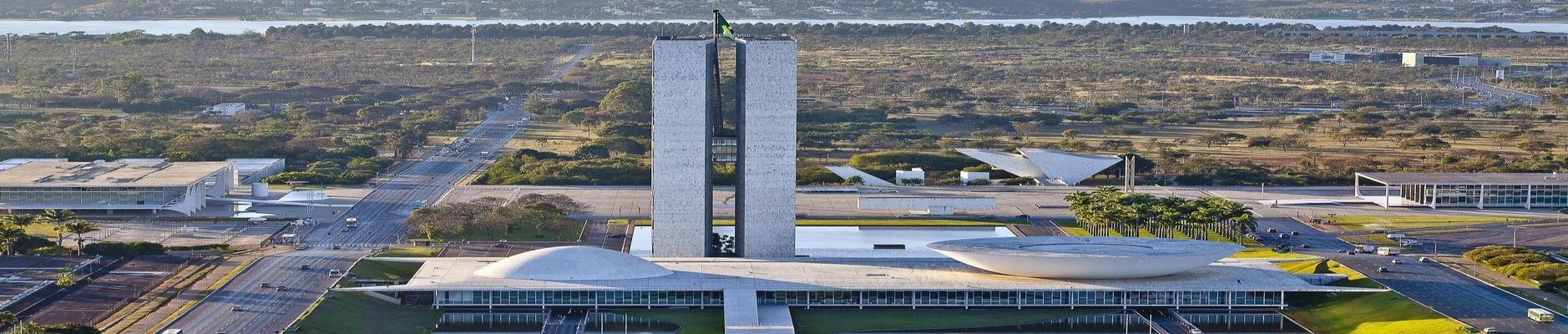
And, remember: this page is dedicated to the South American edition, which will take place at the University of Brasília, Brazil, from November 9 to 11, 2026.
We look forward to welcoming you there!

INTERNATIONAL PUBLIC POLICY ASSOCIATION
LAET-ENTPE, 3 Rue Maurice Audin
69120 Vaulx en Velin, France
Tel. +33 (0) 72 04 72 53
contact@ippa-pp.org


