Welcome to Brasília!
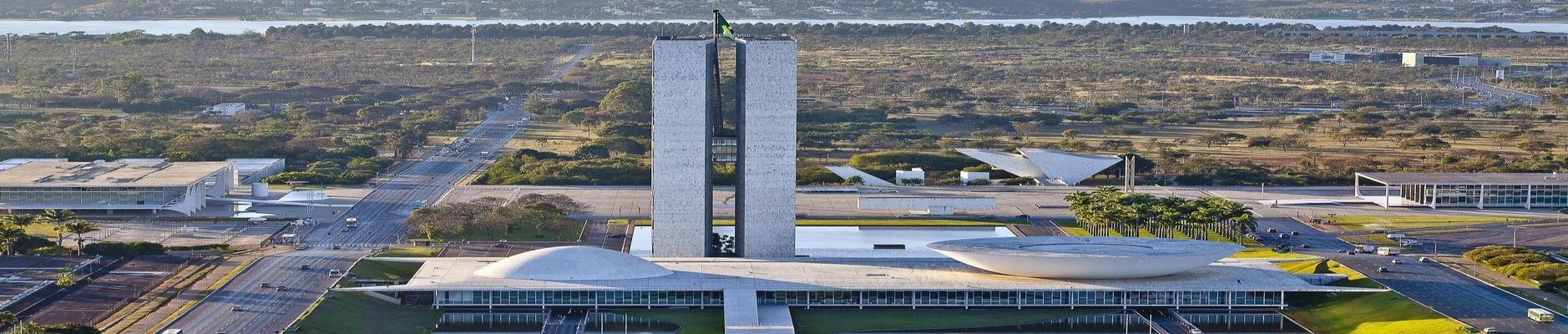
Brasília is a unique city in the world. Entirely planned from scratch and inaugurated on April 21, 1960, it was conceived as the ultimate symbol of state modernity and as the expression of a national project oriented toward the future. Recognized as a World Heritage Site by UNESCO, Brazil’s federal capital lies at the geographical heart of the country, in the Central Plateau, and brings together the three branches of government within an urban space designed to convey order, rationality, and control.
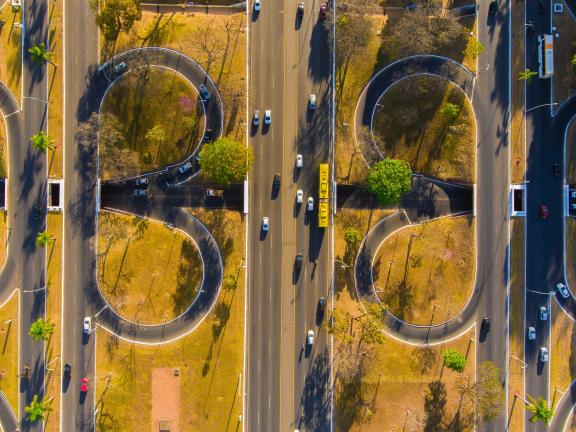
Envisioned within the developmentalist context of President Juscelino Kubitschek, under the motto “fifty years in five,” Brasília embodies a form of accelerated modernization in which the future was projected onto the territory before everyday life had fully taken shape. Its layout, designed by Lúcio Costa and materialized through the monumental architecture of Oscar Niemeyer, organizes the city into functional axes often compared to the shape of an airplane. This grand aesthetic, however, also reflects a specific urban policy: the strict separation of functions, the centralization of political power, and the prioritization of the automobile as the structuring axis of mobility.
The construction of the city, carried out in record time by migrant workers known as candangos, also reveals a less celebrated dimension of its history. The promise of modernity was sustained by intensive labor and, to a significant extent, followed by the marginalization of these same workers, who were displaced to so-called satellite cities that today concentrate most of the Federal District’s population.
With approximately 3.1 million inhabitants and a territory of 5,761 km², Brasília is often described as an organized and functional metropolis. At the same time, its urban form reveals marked socio-spatial inequalities. On one side, the Plano Piloto, characterized by low density, large distances, and a strong institutional presence; on the other, extensive peripheral areas where the working population that sustains the city’s daily functioning is concentrated.
Our event will take place precisely in the Plano Piloto, the area historically planned as the city’s original core. Hosted at the University of Brasília (UnB), more specifically at its main campus, Campus Darcy Ribeiro, the conference will occupy one of the largest continuous spaces within this central portion of the capital. The choice of venue is not merely logistical but also symbolic: it situates the event within the modernist project of Brasília while also engaging with the social, urban, and political contradictions that have shaped its trajectory.
More than a planned city, Brasília can be understood both as a materialized modernist utopia and as an unfinished urban experience. It is a project that sought to anticipate the future, yet continues to coexist with tensions between monumentality and everyday life, between centralized power and peripheralization of the population.
What to Visit
Brasilia's historical and political center, the Plano Piloto, can be experienced as an open-air architectural narrative. The locations below are key references, most of them free of charge.
Political and historical landmarks
- Three Powers Plaza
The institutional heart of Brazil. It houses the Planalto Palace (Executive), the National Congress (Legislative, with its iconic opposing domes), and the Supreme Federal Court (Judiciary). The entire complex was designed by Niemeyer and Lúcio Costa. Within the plaza, visitors can explore the Tancredo Neves Pantheon of Freedom, the Lúcio Costa Space, which presents the original model of Brasília, and take a break at the Casa de Chá café. -
Itamaraty Palace
Headquarters of the Ministry of Foreign Affairs, combining Niemeyer’s bold lines with gardens designed by Burle Marx, a major reference in modern Brazilian landscape architecture.
Culture and architecture
-
Metropolitan Cathedral of Our Lady of Aparecida
The first monument built in Brasília, with its cornerstone laid in 1958 and inaugurated in 1970. Its hyperboloid structure, composed of 16 curved concrete columns opening toward the sky, is considered one of Niemeyer’s most emblematic works. Admission is free. -
National Museum of the Republic and National Library
Together they form the Cultural Complex of the Republic, located between the central bus station and the Cathedral. The National Museum features a monumental semi-spherical structure (25 m radius dome, 26.25 m height, 15,000 m² total area), also designed by Niemeyer. Cultural programming varies throughout the year. -
Cláudio Santoro National Theater
A cultural landmark of the capital, noted for its distinctive pyramidal architecture. It hosts music, theater, and dance performances and is one of the main stages of Brasília’s cultural scene. -
Sesi Lab
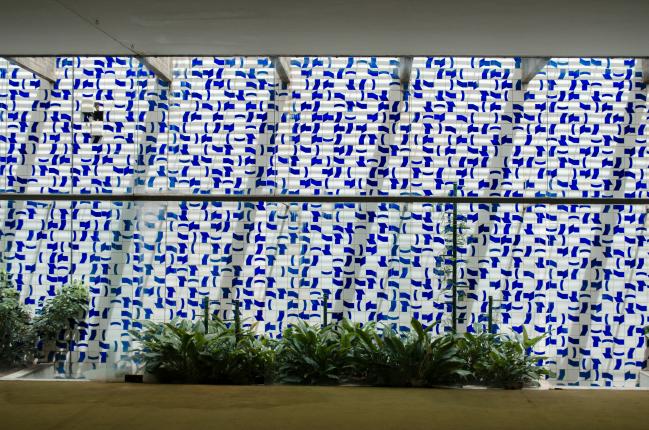
An interactive museum connecting art, science, and technology in the heart of the Plano Piloto. It occupies the historic building of the former Touring Club of Brazil, designed by Niemeyer, and includes a panel by Athos Bulcão, a café with a viewpoint, and revitalized green areas. -
CCBB – Banco do Brasil Cultural Center
A cultural center housed in a building designed by Oscar Niemeyer, with landscaping by Alda Rabello Cunha. It features galleries, cinema, theater, gardens, a bistro, and a café, with a diverse program of exhibitions, performances, and festivals. Free entry with ticket reservation. Open Tuesday to Sunday, 9:00 a.m. to 9:00 p.m.
Panoramic and leisure spots
-
TV Tower
One of the best viewpoints to appreciate the Plano Piloto’s layout. Around it, the traditional Tower Fair offers local crafts and food. -
JK Bridge
An icon of contemporary Brazilian engineering and design. Its elegant curves cross Lake Paranoá, creating a striking visual landscape, especially at night. -
Pontão do Lago Sul
A leisure area by the lake, with restaurants, bars, and open spaces. A popular place for relaxation and social interaction. -
Lake Paranoá and City Park
The artificial lake was created to mitigate the region’s low humidity and today plays a central role in leisure and landscape. City Park Dona Sara Kubitschek, one of the largest urban parks in the world, offers trails and large open areas. -
Mané Garrincha Stadium – Arena
One of the largest and most modern stadiums in Latin America. It hosts sporting events, concerts, and large-scale cultural activities. - Digital Tower – “Flower of the Cerrado”
A contemporary structure with a striking design, functioning as a telecommunications tower with viewpoints offering wide views of the region.
Check out the IPA2026 map showing all the locations mentioned: Map of IPA2026
Where to eat and drink
As a meeting for people from all regions of Brazil, Brasília offers a plural cuisine, ranging from Bahian acarajé to Amazonian tacacá. Below is a selection catering to different tastes and occasions.
The city’s gastronomic scene reflects its urban structure: dispersed, diverse, and marked by contrasts between everyday dining and more elaborate experiences. Options range from accessible daily meals to restaurants that require planning and reservation.
Near the event (UnB and FINATEC)
- FINATEC Restaurant — practical option within the event area
- Sebinho Café & Cultura — bookstore, café, and restaurant
- NATTU Restaurant — contemporary healthy cuisine
- Beijódromo Vegan Restaurant (UnB) — a vergan option on campus, integrated into the academic and cultural environment
General gastronomy
- Tower Fair — diverse regional food in an open-air market
- Armazém do Campo — agroecological and socially oriented restaurant
- Tia Zélia — traditional home-style food
- Quintal da Vila — informal cultural space
More elaborate dining
- Fazenda Malunga — organic food reference
- Fausto & Manoel Pontão — lakeside restaurant
- Brasis Ateliê Gastronômico — Cerrado-focused cuisine
- Mané — multi-restaurant complex
- Pontão do Lago Sul — diverse international options
- Mangai — Northeastern Brazilian cuisine
- Bahea, Kimukeka, Manzuá — Bahian cuisine Bars and casual dining
Bars, burger place and taverns
- Teta Cheese Bar
- Rebu — award-winning burger
- Madre Teresa Deli
- Samba do Beco da Rainha
Weather in November
The conference takes place during the transition between the dry and rainy seasons. Temperatures range from 20°C to 28°C. Mornings are usually sunny, with possible short rain showers in the afternoon. Light clothing and hydration are recommended.
Getting around
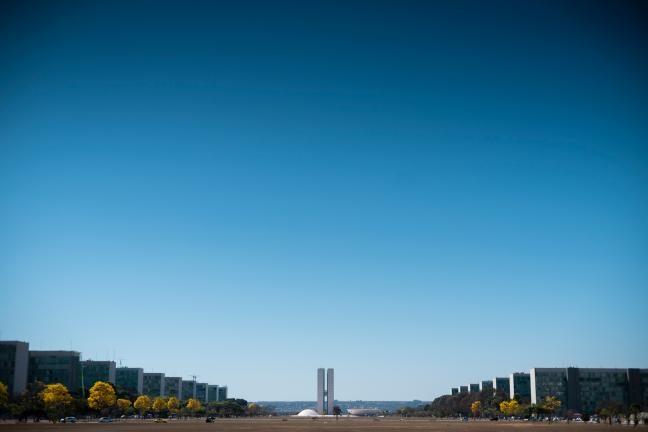
Brasília has a unique urban logic, organized by axes and superblocks. Ride-hailing apps such as Uber and 99 are widely used and efficient. The metro has limited coverage, and cars remain the main transport mode. Walking is pleasant in specific areas, especially the South and North Wings, Monumental Axis, and surrounding neighborhoods.
Pratical information
Airport
- Brasília International Airport is located about 12 km from the Plano Piloto, with travel times between 20 and 30 minutes.
Time zone
- UTC-3, no daylight saving time.
Currency and payments
- Brazilian Real (BRL), with widespread card use and PIX payments.
Language
- Portuguese, with English commonly available in central areas.
Connectivity
- Wi-Fi widely available in hotels, cafés, and institutional spaces.
Safety
- Brasília has relatively good safety indicators, but standard precautions are recommended, especially at night.
Questions about the city can be directed to the local organizing committee.
To learn more about Brasília
For those who want to know more about the city, its history and its urban configuration, we recommend:
- UNESCO’s website on Brasília (World Heritage Site)
- National Institute of Historic and Artistic Heritage (IPHAN) – Brasília
- Virtual Museum of Brasília
- University of Brasília (UnB)
- Federal District Institute of Research and Statistics (IPEDF Codeplan)
- Cadernos Metrópole Magazine
- Brazilian Institute of Geography and Statistics (IBGE)

INTERNATIONAL PUBLIC POLICY ASSOCIATION
LAET-ENTPE, 3 Rue Maurice Audin
69120 Vaulx en Velin, France
Tel. +33 (0) 72 04 72 53
contact@ippa-pp.org


